
NCR Corporation
Bitcoin Banking Integration
Bridging the gap between digital banking and digital asset ownership.
RoleUX Designer
Scale650 US Institutions
Timeline
12-Month Program
OutcomeBuild-Ready Hand-off
01 / Context
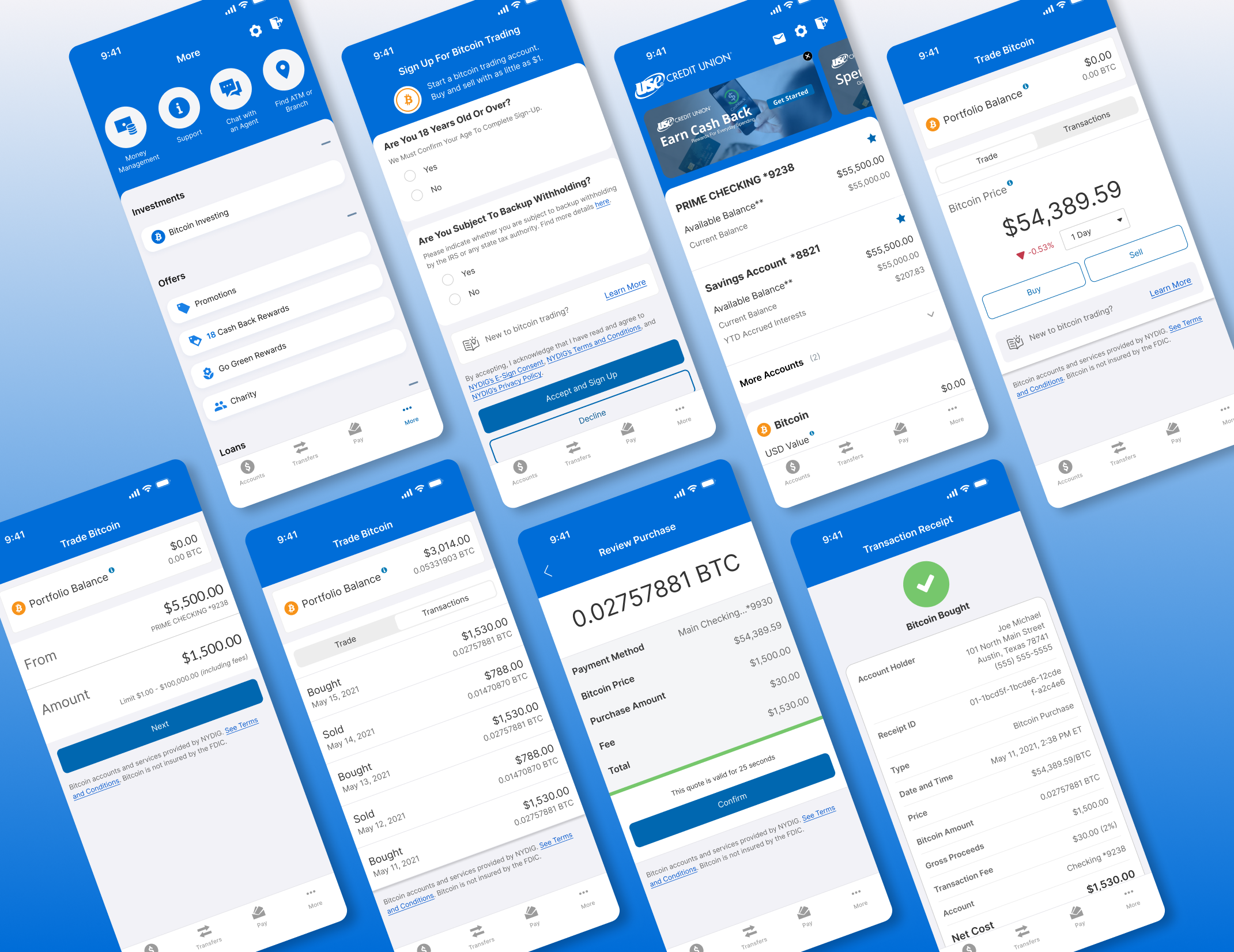
NCR & NYDIG (New York Digital Investment Group) reached a partnership aiming to break into the cryptocurrency trading space, offering Bitcoin trading and custody internally to customers who want to participate.
As it stands, if someone wanted to buy Bitcoin they would need to venture onto an external digital asset exchange like Robinhood, PayPal, or Coinbase—all of which currently have a market hold on retail-facing cryptocurrency trading and services. This partnership would allow up to 650 US-based banks and credit unions to offer cryptocurrency trading services and Bitcoin custody to about 24 million customers through NCR’s mobile application.
02 / Analysis
Interviews
We interviewed 11 participants to rate their familiarity with cryptocurrencies on a scale of 1-5 (Not Familiar - Very Familiar), and followed up with questions about early adoption and the biggest barriers to entry.
Key Takeaways
Most participants see Bitcoin as some sort of investment vehicle, with varying degrees of speculation & volatility.
Volatility, complexity, and misinformation stand out as the primary barriers to entry for users. They need more confidence in long-term investments.
Early Bitcoin adoption is the strongest predictor of acceptance and interaction preference.
Competitors
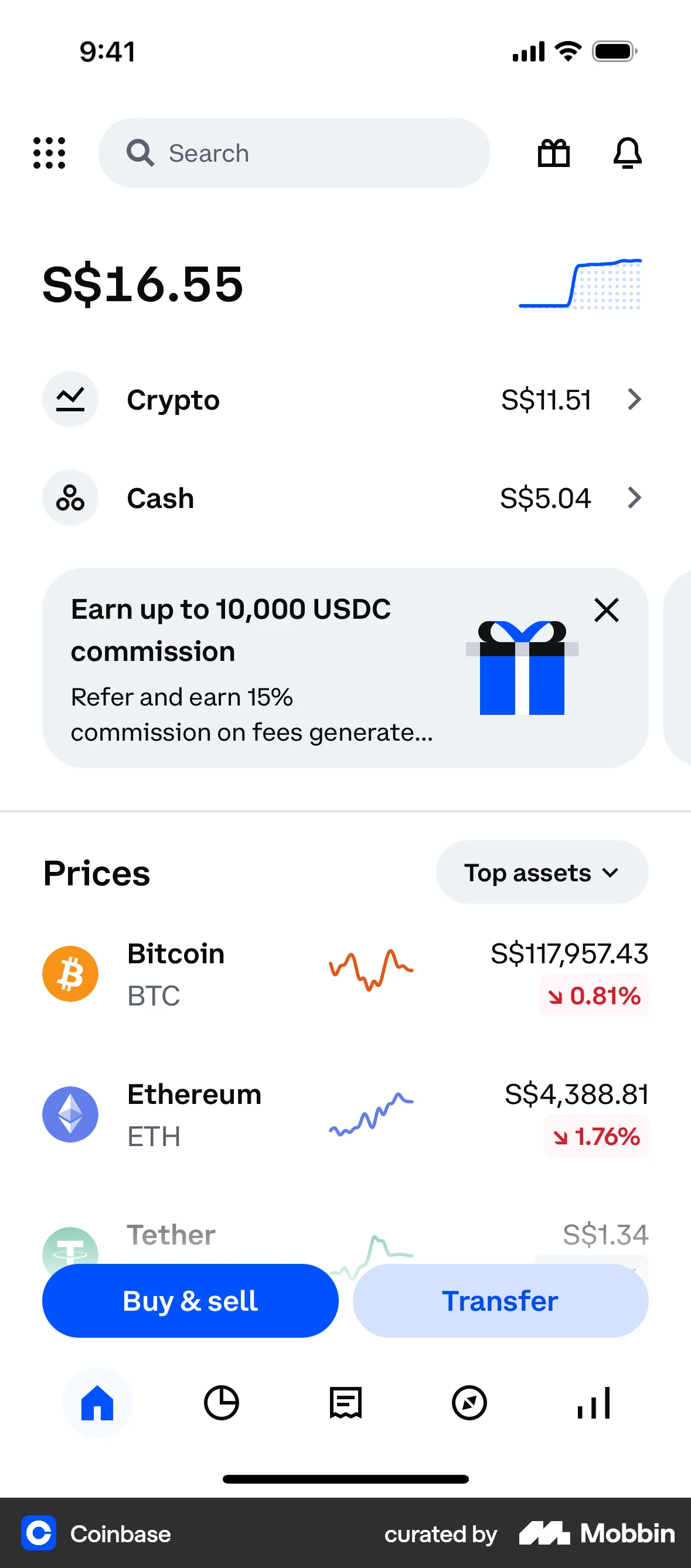
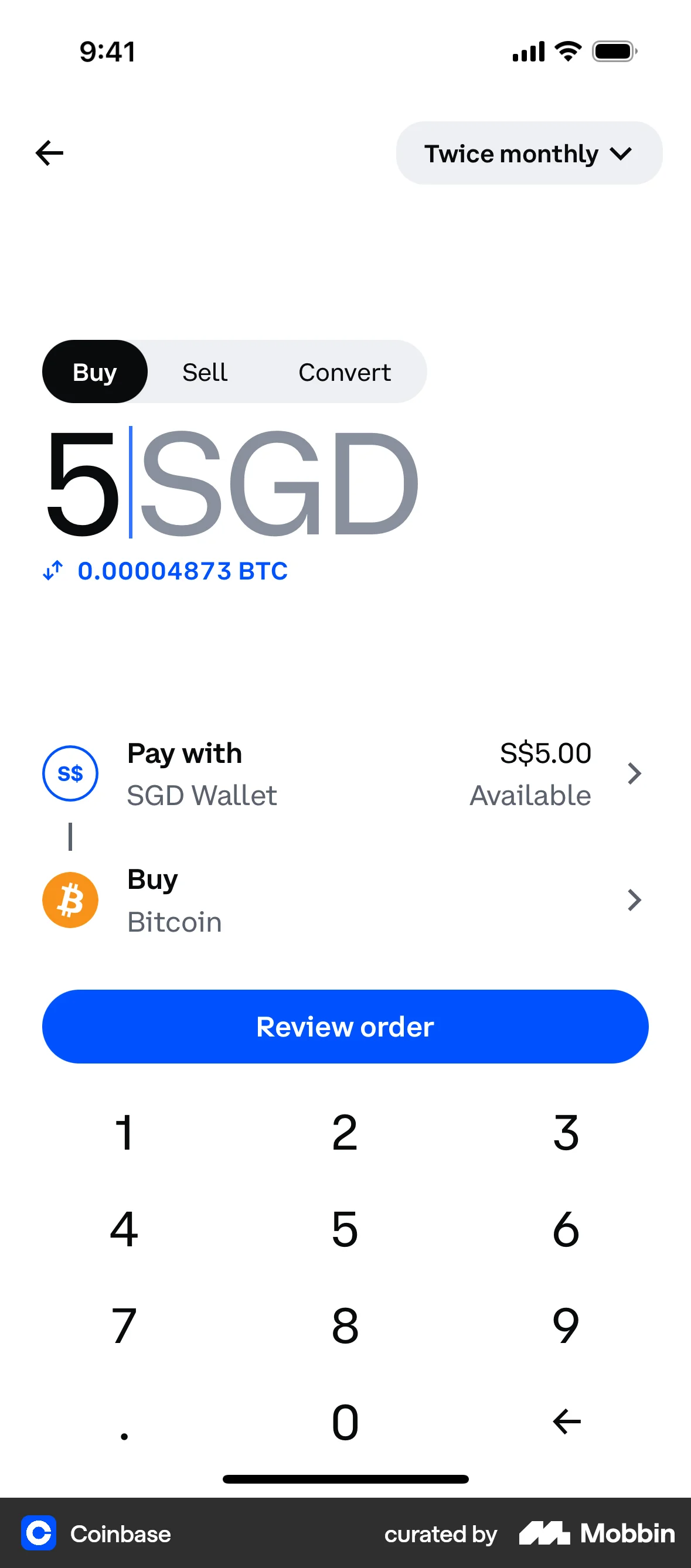
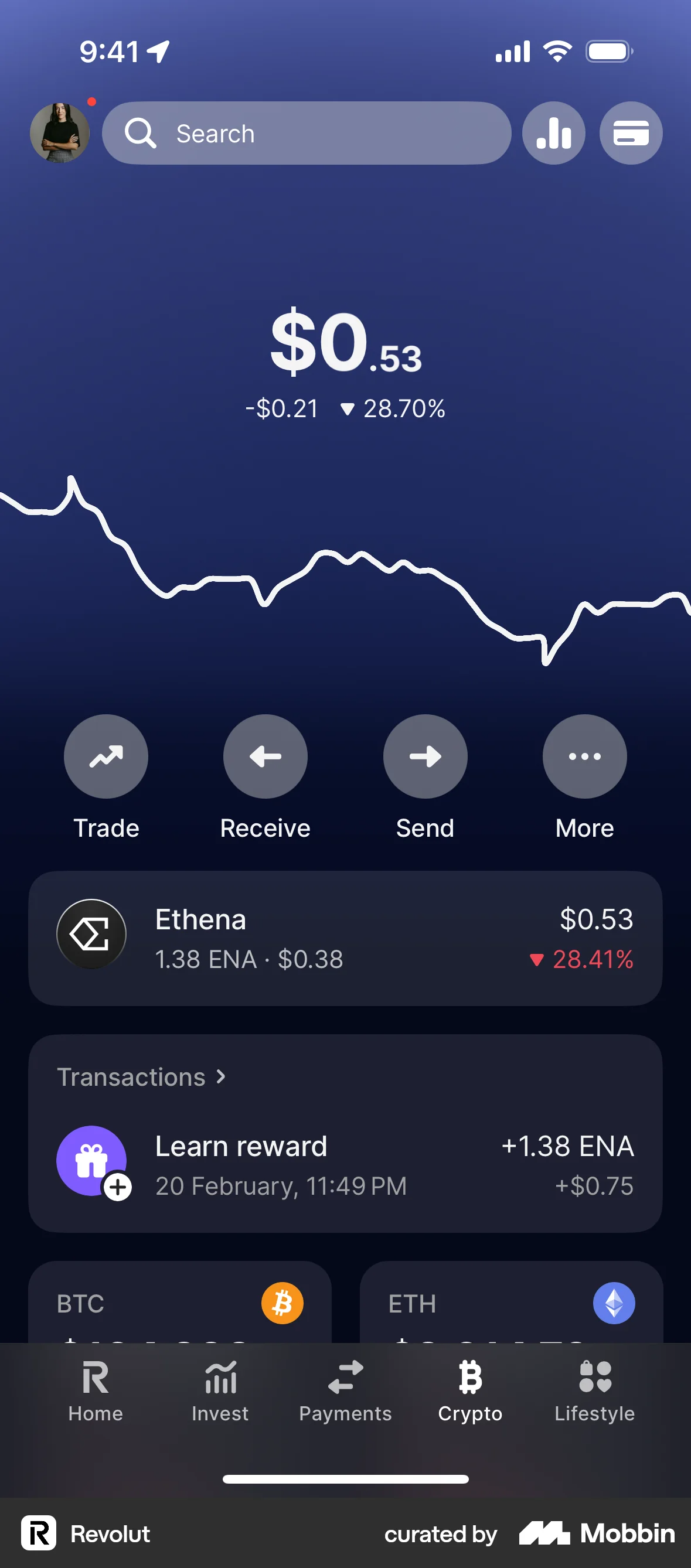
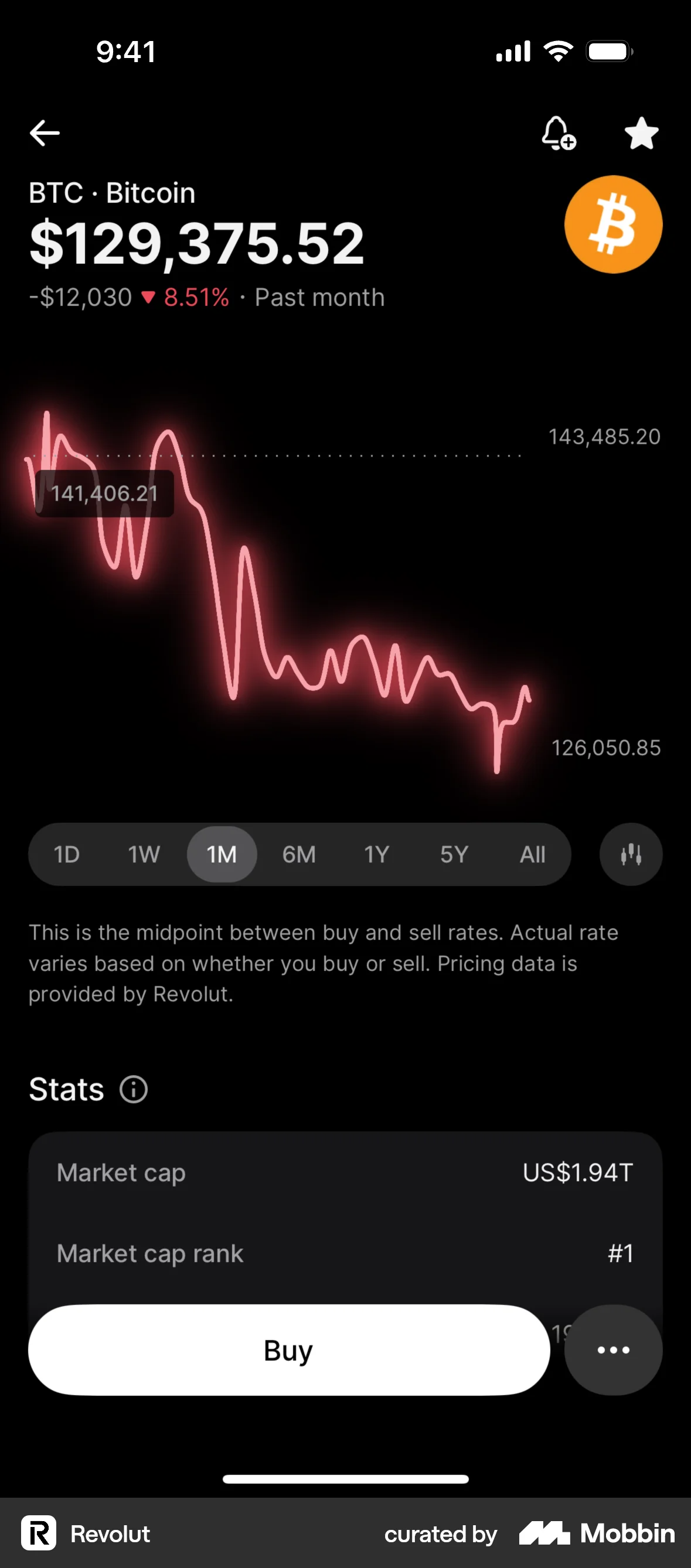
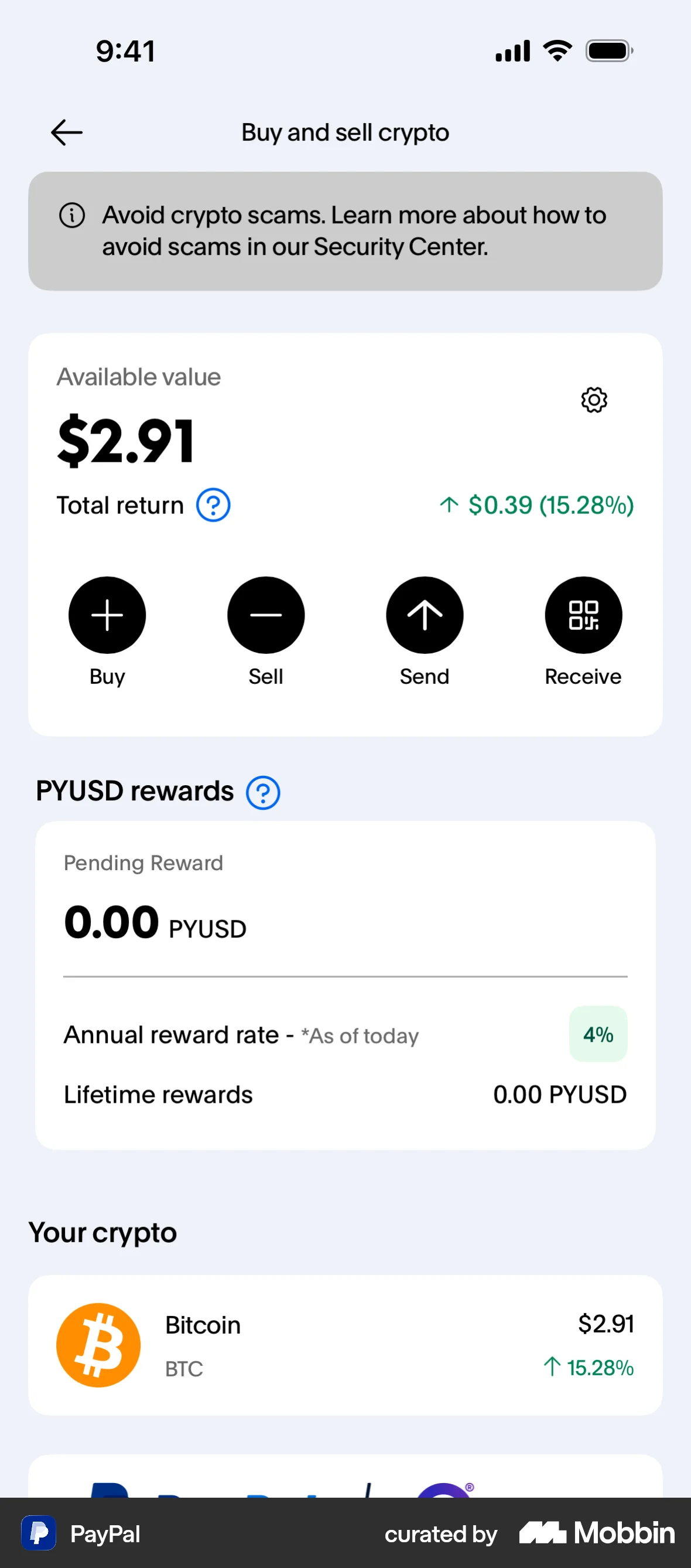
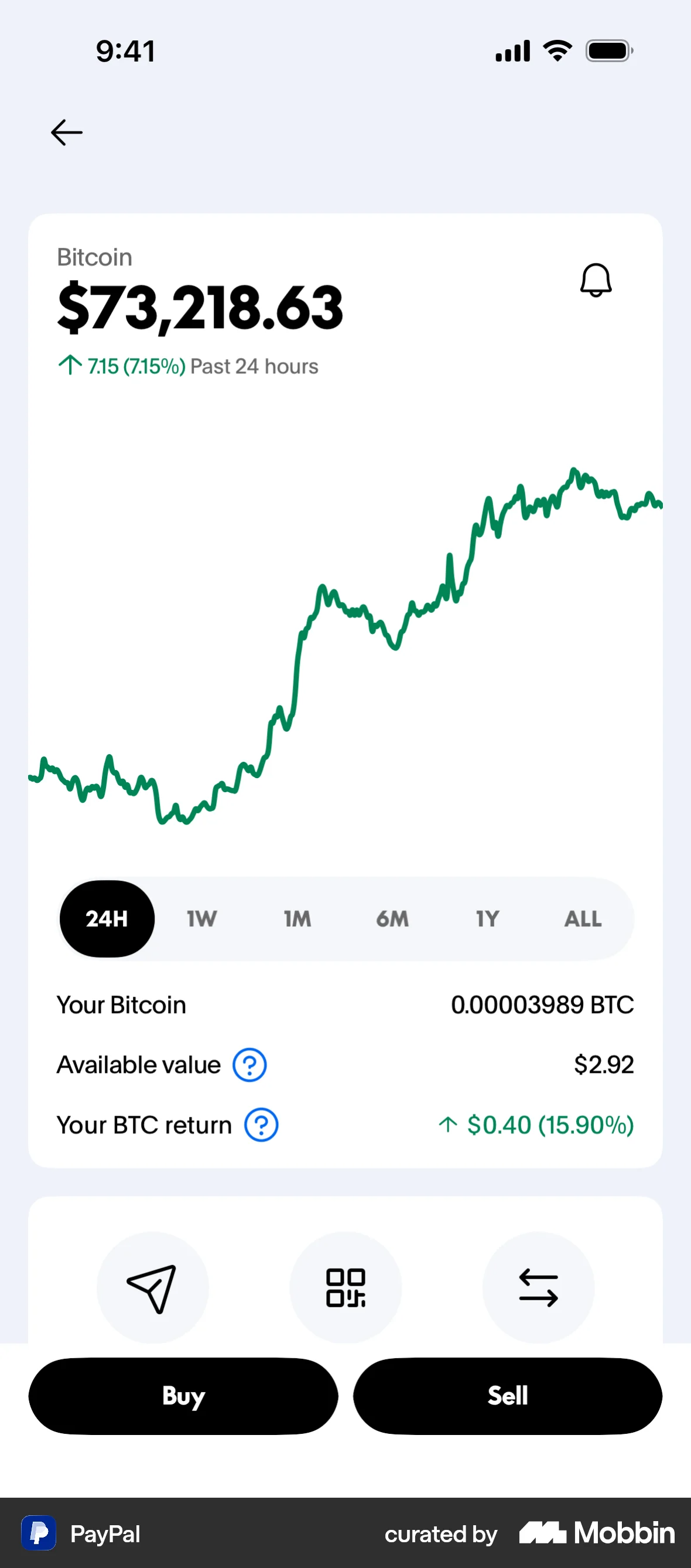
We collected design examples from external cryptocurrency exchanges and applications—among which were Coinbase, PayPal, Robinhood, Revolut, Venmo, and Cash App. Our goal was to gain insight into core user actions, and discover the factors that contributed to their successes and failures.
Strengths
Intuitive and easy to navigate interfaces allowing users to buy and sell Bitcoin, view the current Bitcoin price and their own holdings, and search through their transaction history.
Challenges
Educational and onboarding tools for a new user—or a user wanting to understand cryptocurrency better—are often limited, buried, or not present at all. Too many different cryptocurrencies to choose from, all with different use cases that are difficult to understand and distract users.
03 / Approach
Three iterative design milestones from information architecture to high fidelity prototypes.
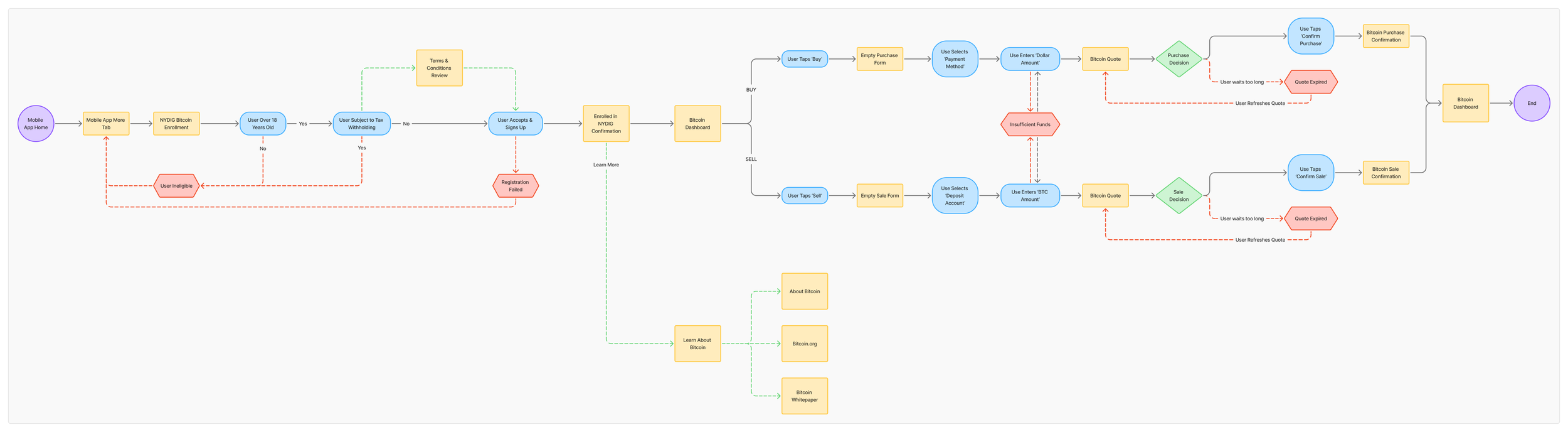
1. Information architecture and holistic member journey mapping
Mapped the full integration flow through feature enablement and onboarding, dashboard, and educational content. Visualized edge cases as a unified system before scaling designs to high fidelity.
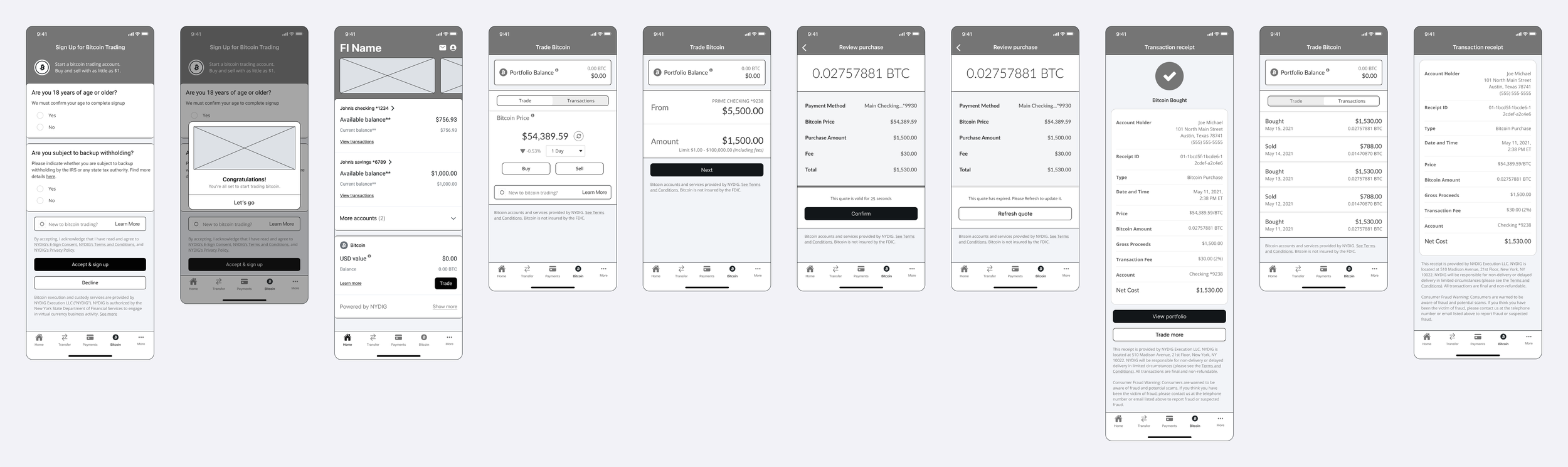
2. Hypothesis driven wireframe progression
Initial wireframes established the enrollment and core trading flows. Additional wireframes established the educational content flows. Each of the flows were brought to stakeholders for review and feedback—keeping critique specific and iteration focus.
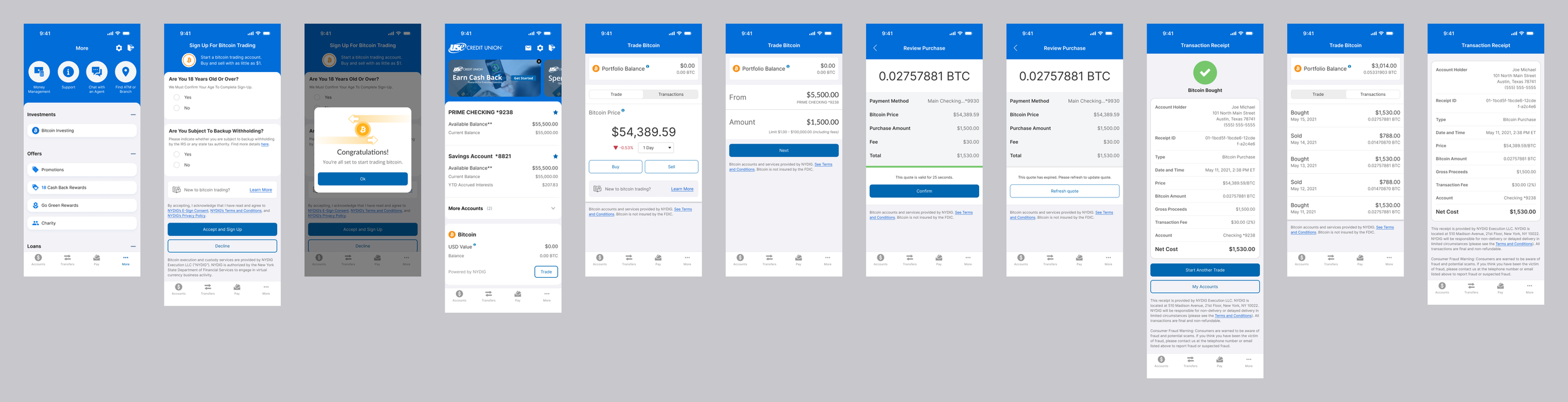
3. High fidelity prototype capturing full user experience
Approved wireframes converted into high fidelity mocks and complete working prototype highlighting the core flows, user interactions, and entry points. Annotated specs paired with the high fidelity mocks to be delivered tot engineering team.
04 / Impact
A validated, build-ready cryptocurrency trading experience delivered for engineering sprint kickoff.
NYDIG was presented and delivered a complete app integration flow, multiple rounds of wireframe testing, and annotated specs paired with high fidelity mocks. The biggest challenges—simple onboarding, surfaced educational content, focused digital asset management—were all clearly addressed and delivered to engineering with a clear target.