
Candescent
Conversational Banking Assistant
Intelligent banking powered through a digital teller experience.
RoleUX Designer
ScopeMobile, Web
Focus
Personalized Digital Teller
Outcome50% Task Speedup
01 / Context
The evolution to Intelligent Banking has begun.
Customer expectations are rising fast. At the same time, AI is changing what “good” looks like and competitors are closing the gap. Banks and credit unions that act now can move faster, reduce risk, and deliver smarter experiences without rebuilding everything from scratch. By unifying data, channels, and real-time insight, Intelligent Banking enables experiences that are adaptive, contextual, and human by design.
02 / Analysis
Interviews
Key Takeaways
AI can monitor and surface information, but every financial action requires human approval—no exceptions.
Users accept AI pattern detection broadly, but object to unsanctioned actions.
Proactive AI is welcomed, but only when relevant, controllable, and non-repetitive.
Research was conducted to establish an evidence-based foundation for product design, feature prioritization, and messaging strategy. 11 moderated, one-on-one interviews were conducted with active mobile or web banking users at local banks or credit unions.
Competitive Benchmarks
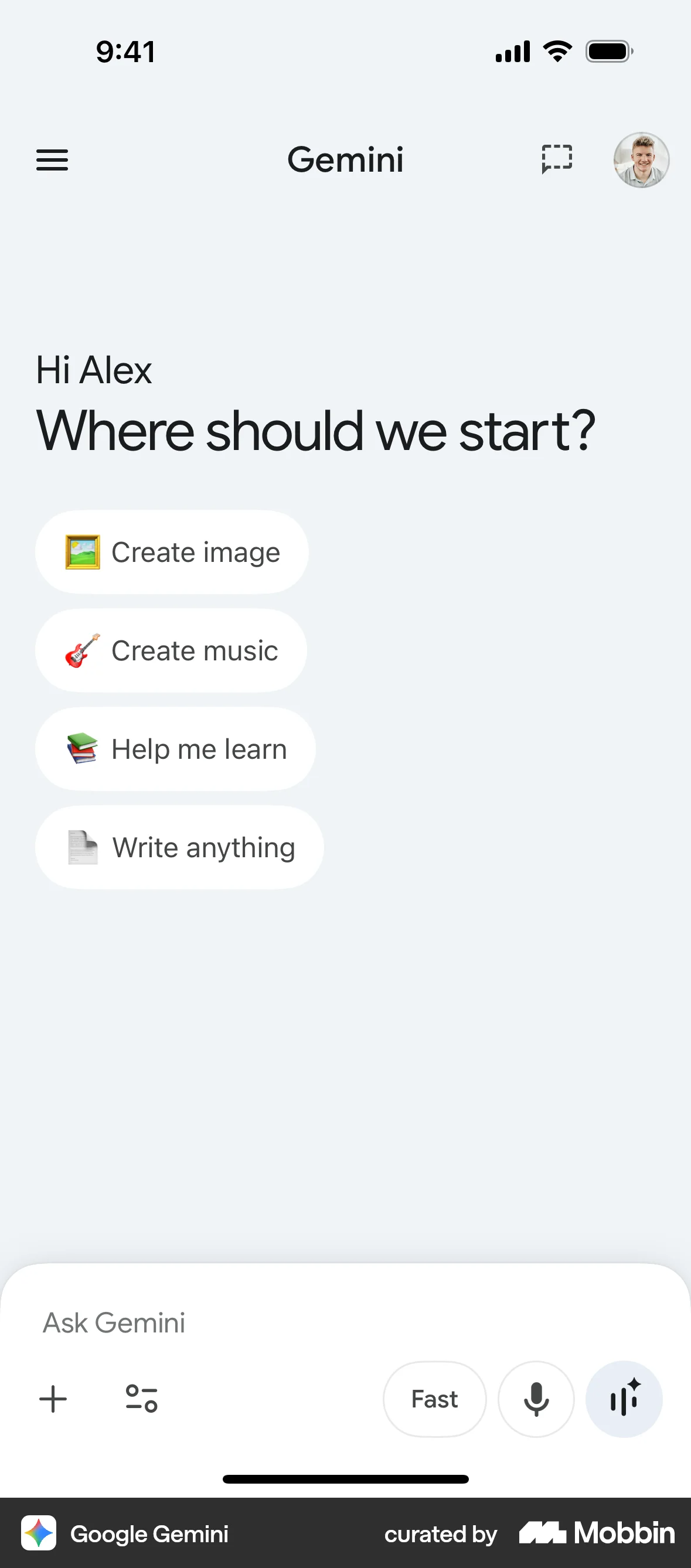
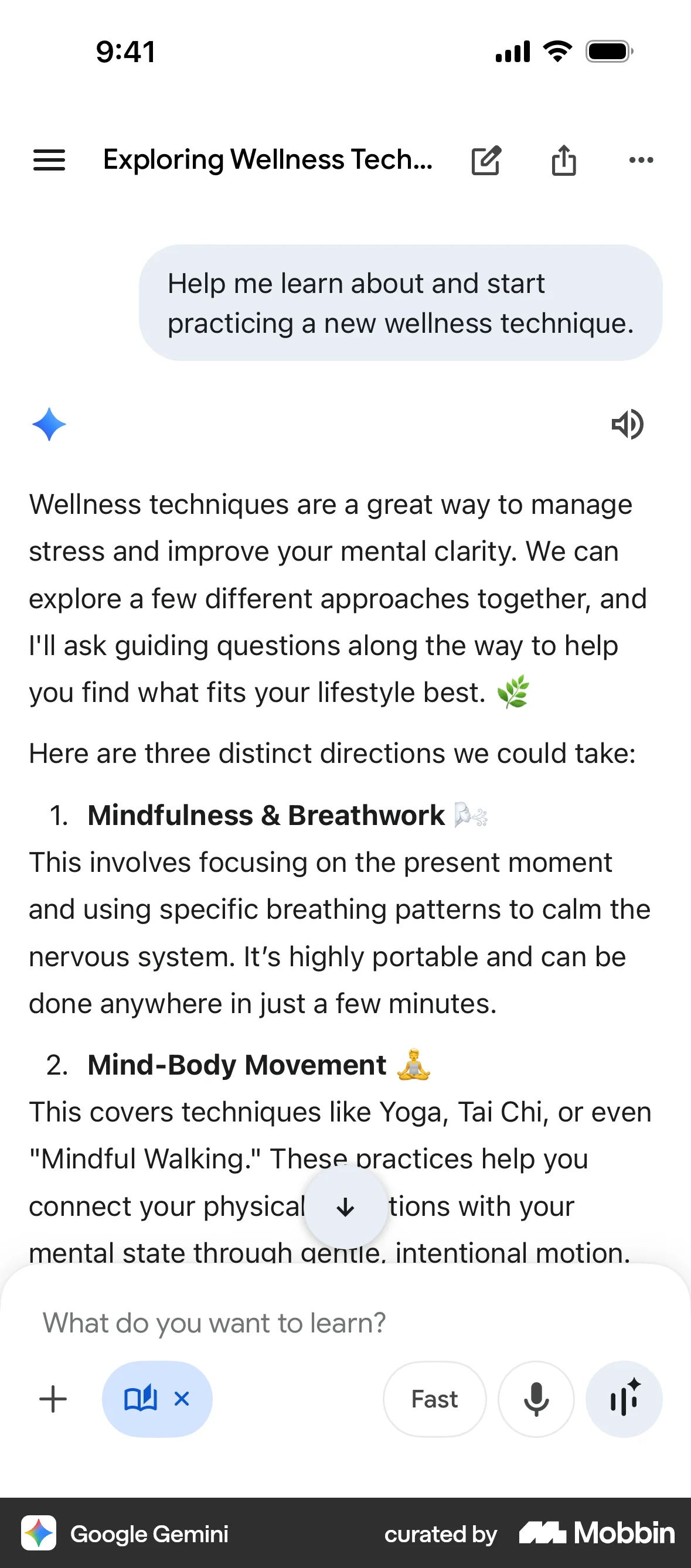
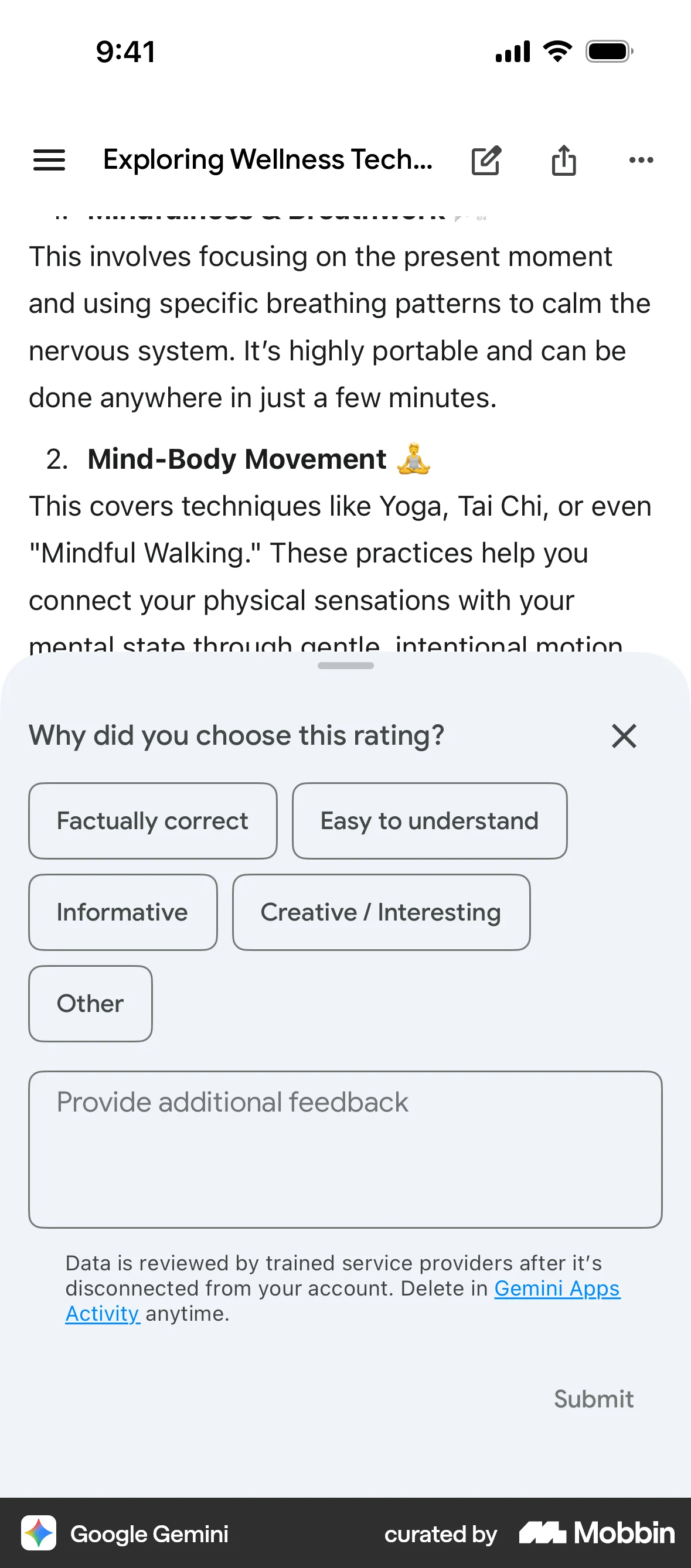
We collected design examples from existing AI assistant features like Banks of America’s Erica and Wells Fargo’s Fargo to gauge their strengths and their weaknesses. Additionally, we looked more broadly at chat models like ChatGPT, Perplexity, and Gemini to understand how they interact and engage with users.
P007 Juan - on Bank of America’s Erica
“Compared to ChatGPT or Perplexity, it’s not as powerful as a tool.”
Implications: Set the internal quality benchmark at frontier AI model standards for accuracy, speed, and conversational fluency. Minimize clarifying questions by using account and page context to infer intent. Match response length to question complexity—simple questions should get direct answers and not preamble.

03 / Approach
Four foundational interaction patterns designed for practical and non-intrusive assistance.
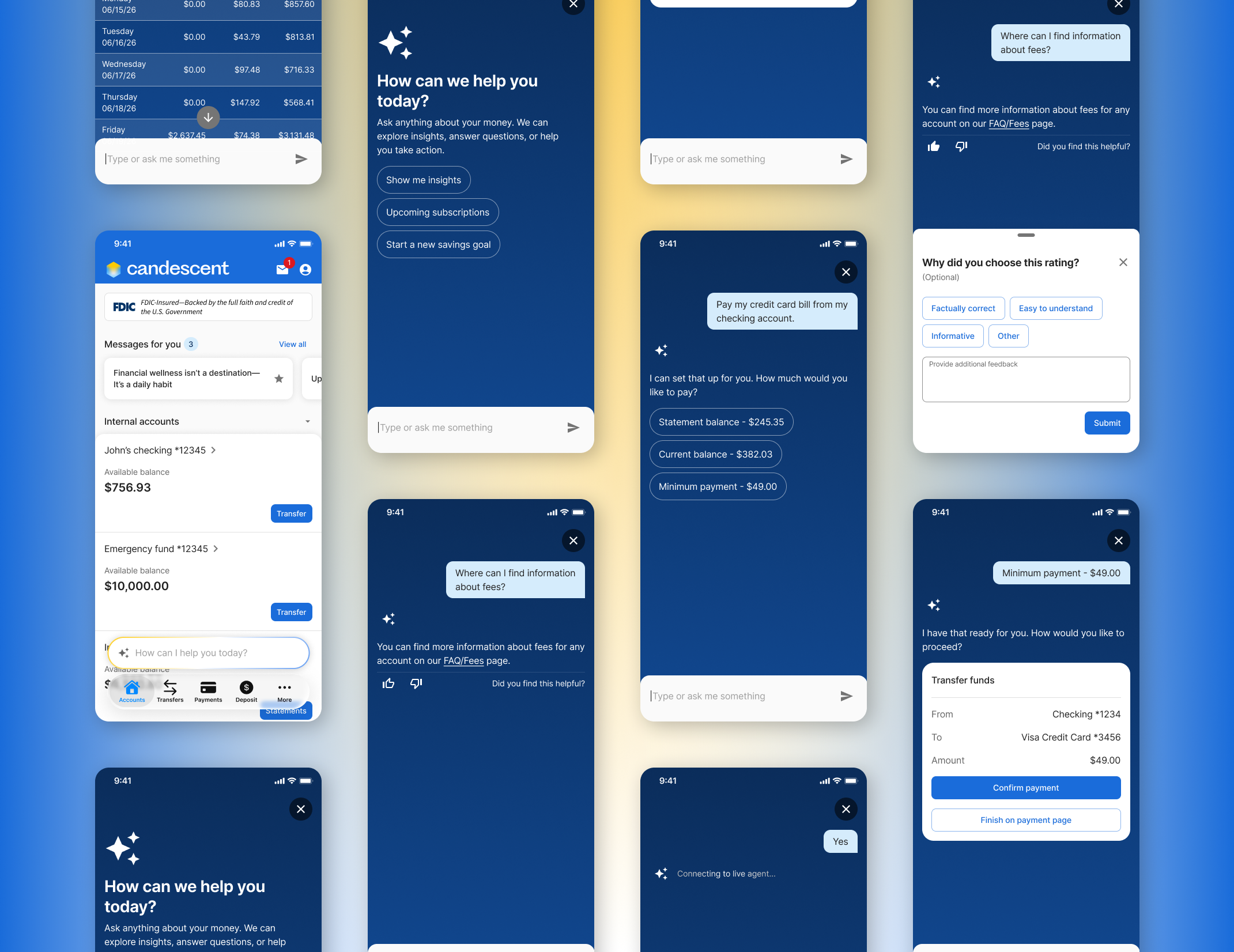
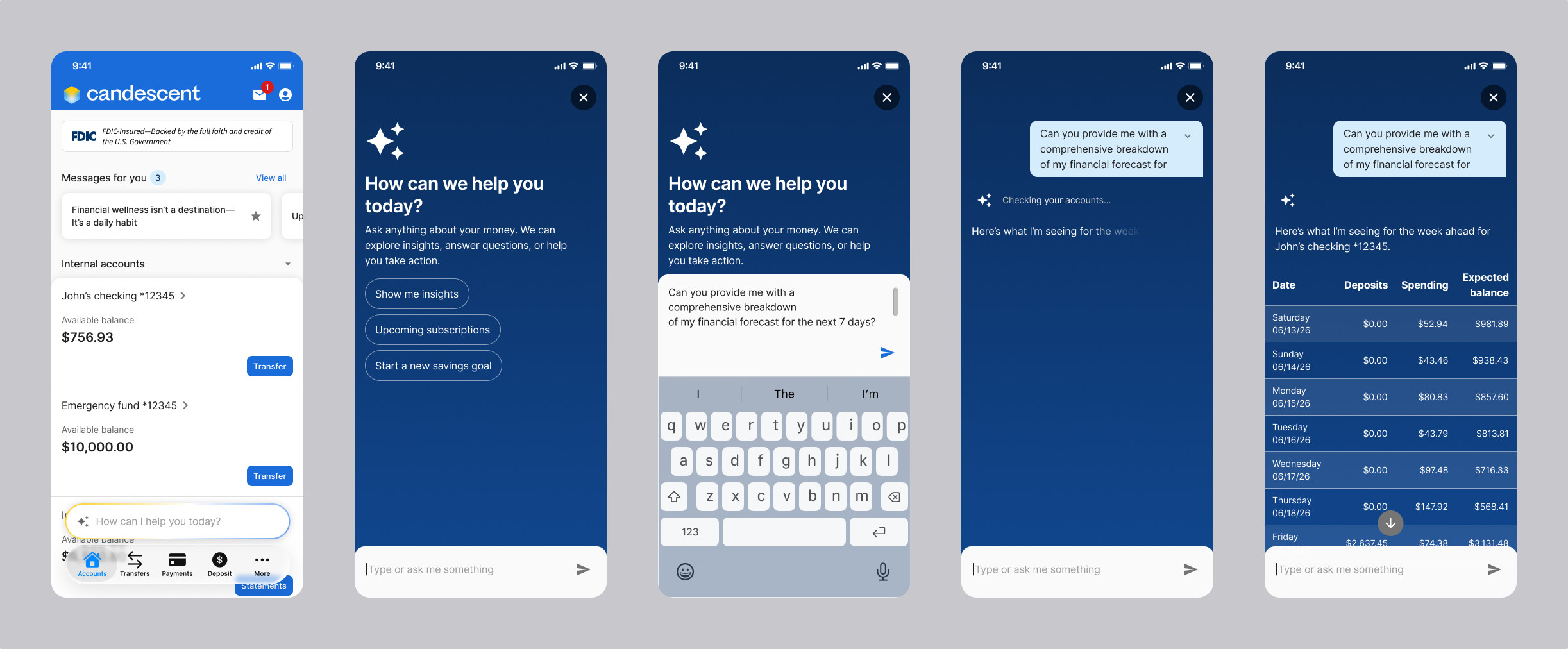
1. Context-driven opening suggestions and responses
AI assistant uses previous page context and smart inference to provide prompt suggestions to the user when they first land on the chat interface. Assistant uses the relevant data to generate accurate and tailored responses to the user that match the expected response level needed.
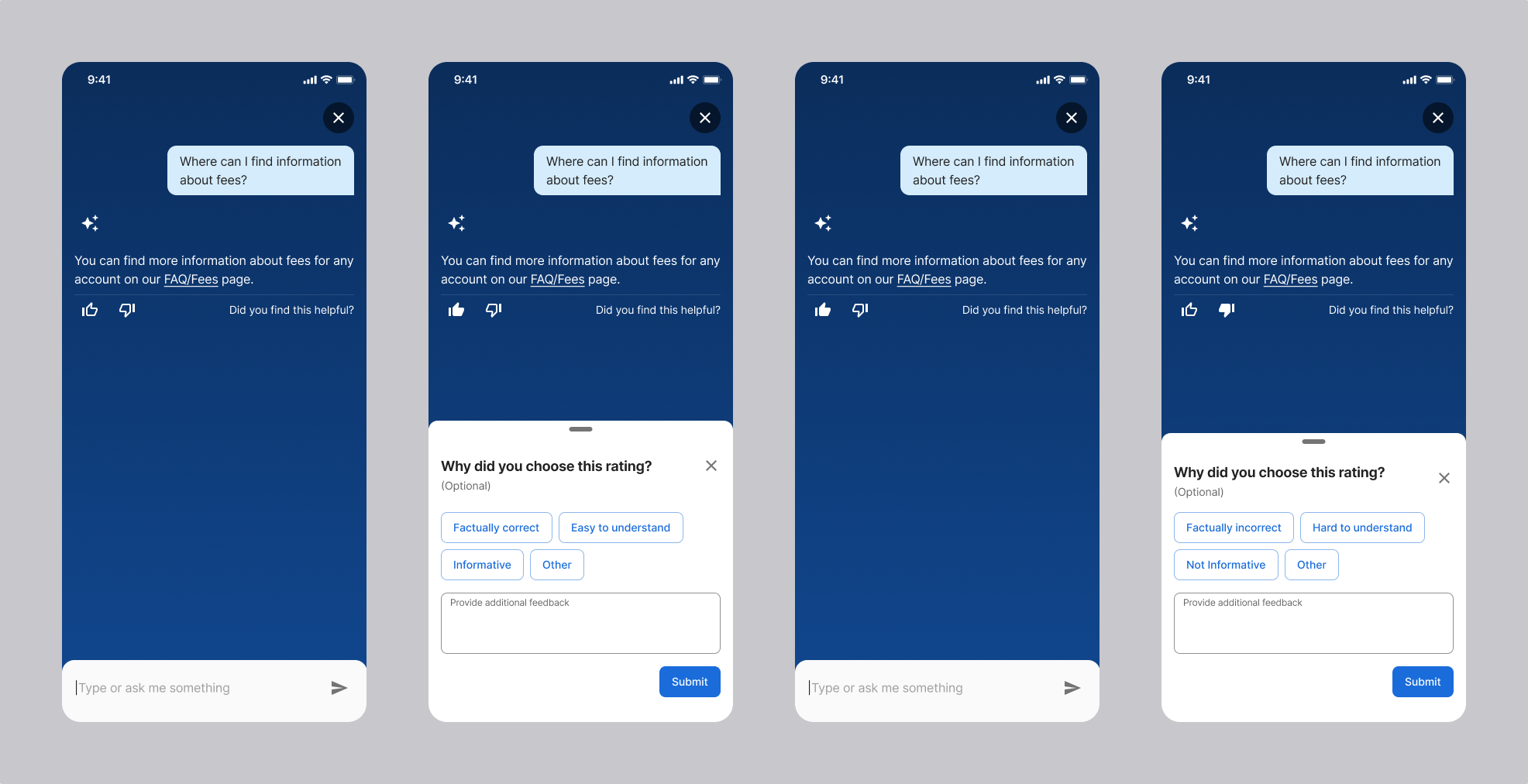
2. User feedback on generated responses with custom messaging
Provide user feedback options allowing our teams to capture real user data on AI assistant responses; diving deeper into understanding where the AI works best, and where it needs improvement. While feedback is optional, users can provide custom responses to help us better understand issues that may arise in the future.
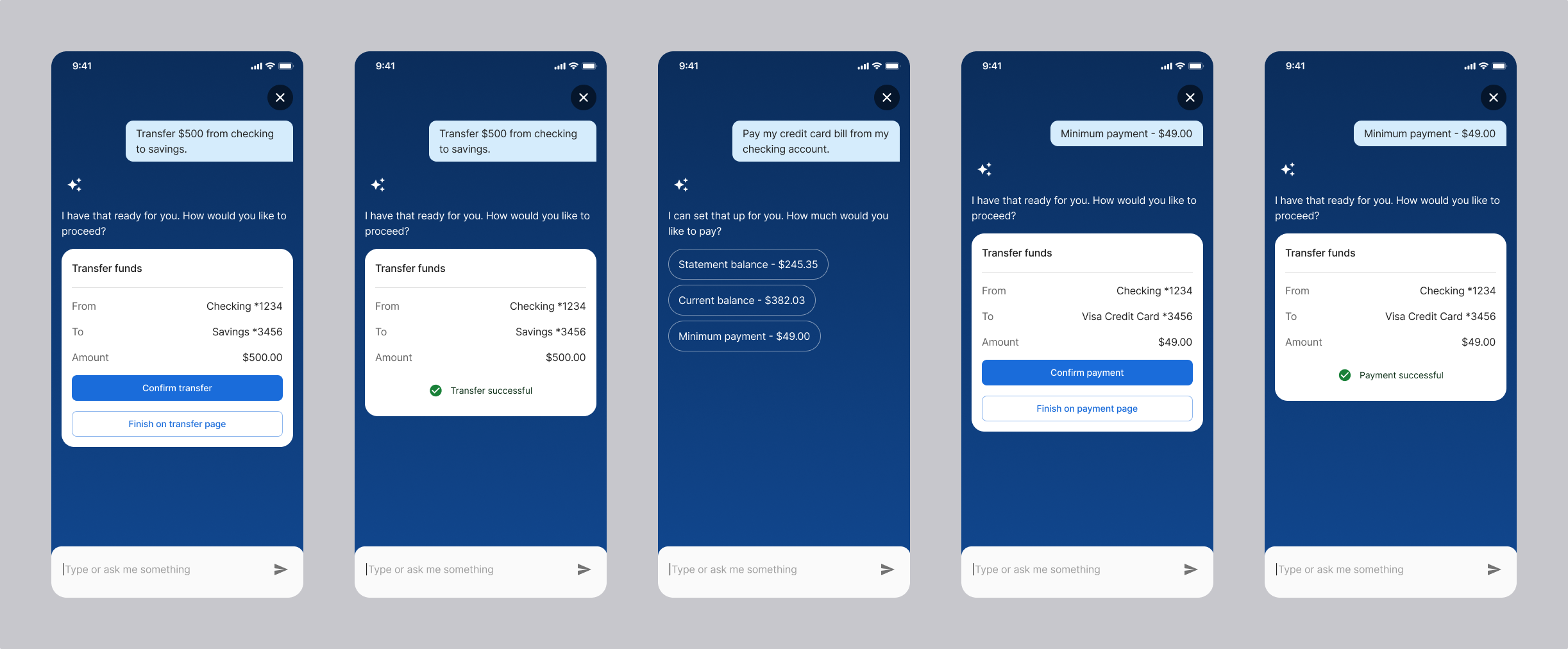
3. Dynamic forms for quicker payments and transfers
Traditional payments and transfers require users to navigate through different areas of the app and multi-step menus. Simplified these flows by offering natural language conversations and dynamically generated forms to complete these actions—similar to speaking with a human teller at a branch.
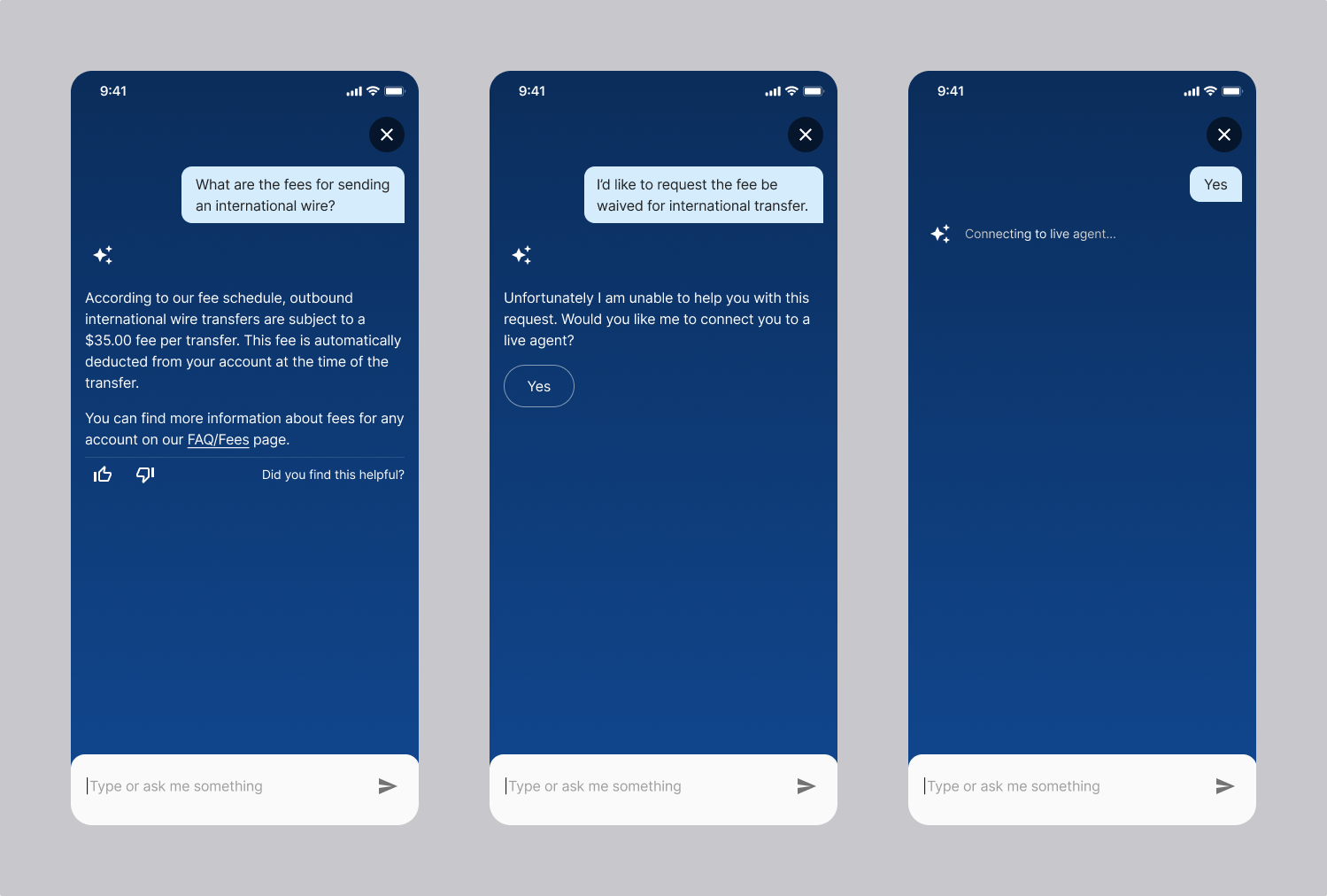
4. Live agent hand-off for complex requests
Some financial institutions have live agents available to service customer support requests and complex questions. When the AI is unable to provide adequate support or respond to complex queries, it provides a smooth transfer to a live agent that is available.
04 / Impact
A validated, build-ready AI chat assistant experience delivered for engineering sprint kickoff.
Engineers were presented and delivered a complete AI chat assistant integration flow, and annotated specs paired with high fidelity mocks. Designs were validated against user research insights to match competitive benchmark expectations.
Improved advanced searching
Finding uncommon app pages or buried information is now a single prompt away.
Increase task speed by 50%
Tasks like payments and transfers can be performed in seconds without the need to navigate multi-step menus and forms.